Best Places to See During Your Nile River Cruise
Synopsis
Nile River is the longest river in the world, spanning 4,160 miles from Uganda to Egypt.
An unmatched chance to discover several ancient Egyptian sites along the banks of the Nile River is provided by a cruise.
It’s a suggested method to take in the abundance of historical sites and contemporary accomplishments along the banks of the Nile.
The Philae Temple, the Aswan High Dam, Abu Simbel Temples, Kom Ombo Temple, Edfu Temple, Nubian Village, the Monastery of St. Simeon, and the Tombs of the Nobles are just a few of the amazing ancient Egyptian sites found at Aswan, which is located on the eastern bank of the Nile.
A wealth of historical sites may be found in Luxor, the former capital of Thebes. The Karnak Temples Complex, Luxor Museum, Luxor Temple, and other notable locations reachable by Nile cruise comprise the Hatshepsut Temple, the Colossi of Memnon, the Karnak Temples Complex, the Luxor Museum, the Luxor Temple, the Valley of the Kings, the Dendera Temple, and the Abydos Temples.
The captivating Nile River, which flows roughly 4,160 miles from Uganda to Egypt, is one of Egypt’s many blessings. The most remarkable aspect of it is that it is regarded as the longest river in the world. Although the Amazon River is the only river that can match the Nile’s length, the Nile has proven to the world that it is unmatched, more fascinating, and extraordinarily magnificent.
Along its length, the Nile River traverses a variety of ecosystems and gathers water from eleven different African nations. A Nile River boat tour, which will take you deep into the Nile, is the most highly recommended way to discover and visit the many amazing items, landmarks, and sights that are scattered across its shores.
The Nile Since the time of the ancient Egyptians, the Nile River has had a profound impact on their way of life, culture, history, and agricultural system. You’ll have the best opportunity to see the top sights in Luxor and Aswan while on a Nile River cruise, plus you’ll be able to utilize the amazing amenities on board the luxurious cruise ship, making it a genuinely fascinating and amazing experience in Egypt. On a Nile River tour, you will get the chance to see the following major Egyptian cities:
Best Aswan Attraction Through A Nile Cruise
Aswan is located on the Nile’s eastern bank in southern Egypt, and it is home to some of the greatest ancient Egyptian attractions, landmarks, and the best modern accomplishments and structures.
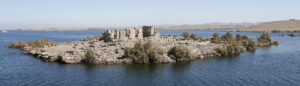
Philae Temple is a miraculous symbol of divine golden allure and pure greatness that came into existence around the 7th or 6th century BC but the oldest part of the temple, which was built during 380-362 BC, is the temple of Isis, who is the goddess of motherhood and healing. Many Ptolemaic rulers in the world sought to immortalize their epic myth of Osiris, who she raised from the dead to become the ruler of the underworld.
With help from the Soviet Union, the significant Aswan High Dam was built between 1960 and 1970 to provide access to the industrial era. It was home to the magnificent Lake Nasser, one of the biggest artificial lakes in the world. It supplies irrigation water and encourages farming, tourist, and finishing. Additionally, it developed into the primary hub for hydroelectric power production, giving Egypt a more promising future.
With help from the Soviet Union, the significant Aswan High Dam was built between 1960 and 1970 to provide access to the industrial era. It was home to the magnificent Lake Nasser, one of the biggest artificial lakes in the world. It supplies irrigation water and encourages farming, tourist, and finishing. Additionally, it developed into the primary hub for hydroelectric power production, giving Egypt a more promising future.
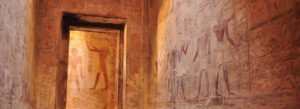
phenomenal Kom Ombo Temple is an immortal golden jewel that was established in the Greco-Roman period between 180 BC and 47 BC to honor two great gods, Horus the Elder, the falcon-headed god Horus, and the crocodile-headed god Sobek, who is associated with fertility and the Nile. Its dual design is completely symmetrical and has many marvelous hieroglyphic inscriptions with carving and scenes showing casing medical instruments and surgical tools, plus many mythological and historical displays.
powerful Edfu Temple has gained the reputation as one of the greatest and biggest temples in the world which was built around 237 BC and 57 BC. The Temple is famous for being highly preserved, located on the ground which held the great battle that took place between Hours the Falcon sky god, and Set, the evil god of the desert. The temple is filled with a number of magnificent cravings and inscriptions of ancient Egyptian mythology, religious beliefs, and very important historical events.
Nubian village
most magical destinations found in the southern parts of Aswan is the honorable Nubian village which is known for its traditional architecture, unique culture, colorful displays, and rich history, plus the warm hospitality of the Nubian people. The Nubian village has the power to tell many great stories and offer all artisans the chance to enjoy a new world that lived along the Nile River for millennia.
Monastery of St. Simeon
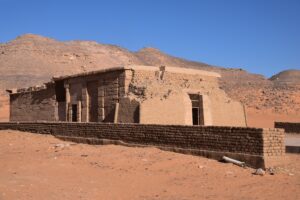
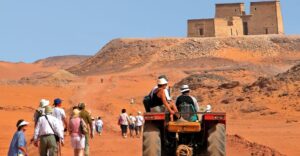
majestic Monastery of Saint Simeon dates all the way back to the 7th century AD on the golden lands of Aswan, where it acted as a center for worship for Christian hermits and monks. It is made of mudbricks and contains unique Nubian and Coptic influences. It was named after a Christian ascetic who lived in the area in complete prayer and solitude.
Tombs of the Nobles
The magnificent Tombs of the Nobles are amazing works of art that were discovered buried in Aswan’s sand on the Nile River’s west bank. The tombs are from the Middle Kingdom of Egypt (2055-1650 BCE), the New Kingdom of Egypt (1550-1070 BCE), and the Old Kingdom of Egypt (2686-2181 BCE). The tombs belonged to several powerful and significant nobles and officials who
served under the Pharaoh’s rule. The most well-known are the adjacent tombs of father and son Mekhu and Sabni, Sarenput II’s tomb, and Harkhuf’s tomb. Located on hillsides and cliffs, all of the Rock-Cut tombs provide a wealth of extremely educational Excellent Hieroglyphic Inscriptions
Landmarks to Explore in Luxor While Boarding A Nile Cruise
The magnificent collection of temples, obelisks, pylons, chapels, and amazing antique buildings that make up the golden area of the gods and kings Karnak complex is a living work of heavenly art. Located on 247 acres, this magnificent place of worship was built between 2000 and 30 BC. The complex, which consists of the Avenue of Sphinxes, the Hypostyle Hall, the Precinct of Amun-Re, the Precinct of Mut, and the Precinct of Montu, is devoted to the Theban triad.
Numerous titles, including the Southern Sanctuary and the House of Golden Royalty, have been bestowed upon the royal marvel Luxor Temple, which served as the venue for the coronation of numerous monarchs, including Amenhotep III and Ramses the Great. Completed in 1400 BC, it served as a major hub for the worship of the golden Theban triad of the 18th dynasty and the creator god Amun. Because it contains some of the most amazing collections of elaborate reliefs, architectural wonders, and hieroglyphic inscriptions that provide a wealth of information about the history of the New Kingdom, it is extremely well preserved.
golden mythical sands of Thebes are hidden chambers filled with incredible stories and treasures that stood the test of time during the New Kingdom period. Valley of the Kings was the burial ground for pharaohs and high-ranking officials of the 18th, 19th, and 20th dynasties, such as Ramses II, Thutmose III, Seti I, and Ramses III. The 63 royal tombs are filled with magical depictions of their lives, achievements, and magnificent facts about their religious beliefs.
Hatshepsut temple
The immortal Hatshepsut temple, which has always been the holy and the holies and a true representation of Pharaoh Hatshepsut’s greatness, is a mark of enduring grace and charm. Around 1479 BC, this three-story wonder was built as an architectural marvel honoring Amun and her magnificent heritage as one of Egypt’s greatest monarchs.
Dendera Temples complex is a hidden gem of treasures and epic stories that were created around the old kingdom and continued all the way to the Ptolemaic and Roman periods (4th century BCE to 1st century CE). The temple holds some of the finest examples of art and architecture, which include the temple of Hathor, the Zodiac, Crypts, and many other great works of art.
Abydos temple
One of Egypt’s most significant archeological landmarks is the epic temple of Abydos, which was built in the 19th Dynasty (c. 1290–1279 BCE) and is devoted to the deity Osiris. The fabled Abydos King List, which offers important historical details regarding the coronation of numerous monarchs from Menes to the new kingdom, is its most valued asset.