Sphinx of Giza
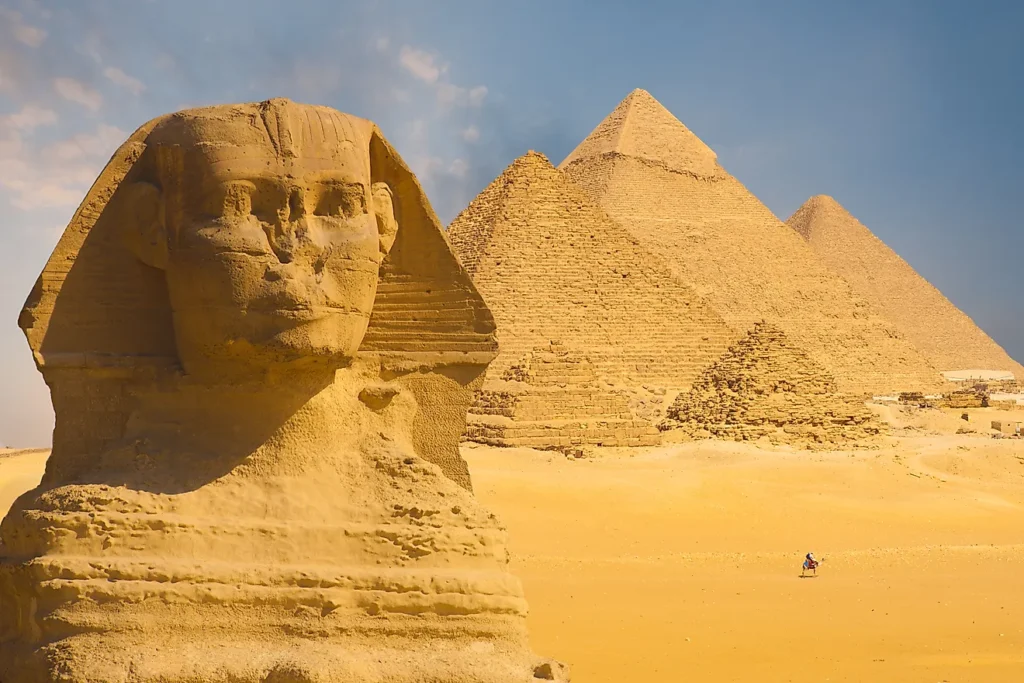
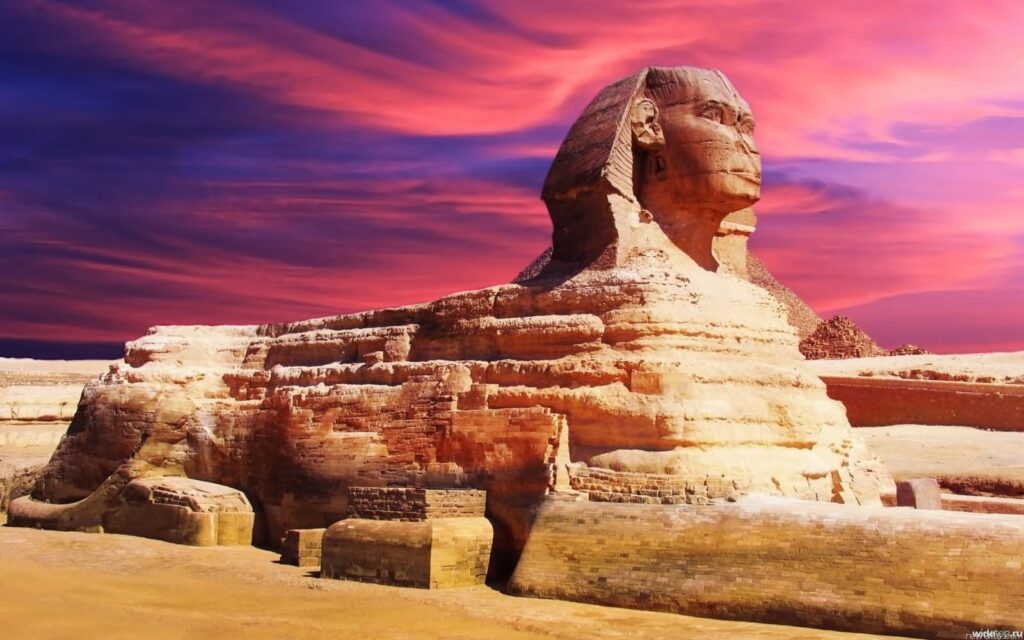
Sphinx of Giza is Colossal statues are one of the hallmarks of ancient Egyptian civilization, and the Great Sphinx of Giza is the most famous. It was carved directly out of the bedrock during the 4th Dynasty (c.2613–2494 BC), which also makes it the oldest. Ancient Egyptian sphinxes represented the king with the body of a lion, in a clear demonstration of his power.
The evidence points to the Great Sphinx having been carved during the reign of Khafre (Khefren to the ancient Greeks; c.2558–2532 BC), the builder of the second of the Giza pyramids. The Great Sphinx and the temple in front of it, called the Sphinx Temple, lie directly next to Khafre’s valley temple and the lower portion of the causeway leading up to his mortuary temple and pyramid. Careful archaeological analysis has revealed that the valley temple was finished before work was begun on the Great Sphinx and its temple. Analysis of the Great Sphinx’s facial features has also revealed striking similarities with those of Khafre’s statues.
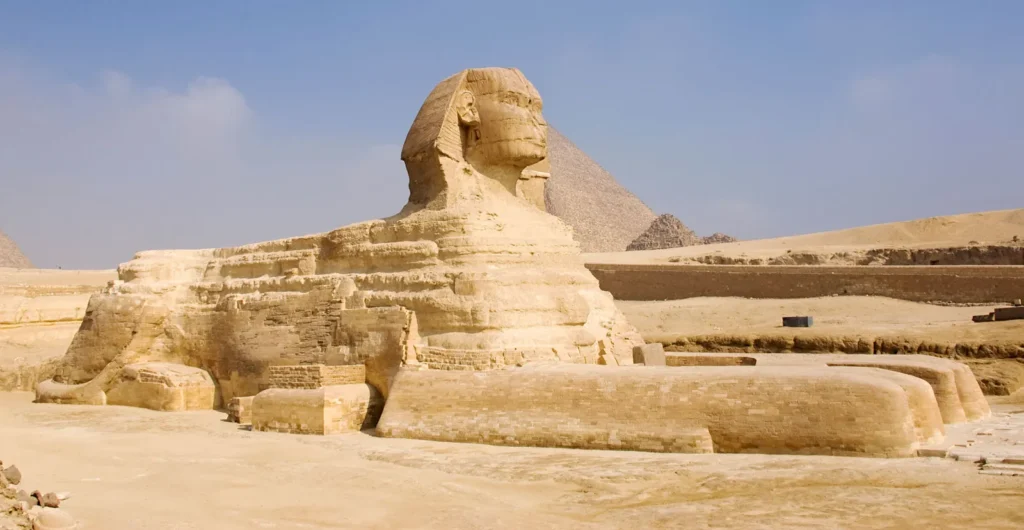
The Great Sphinx has captured the imagination of travelers and explorers for millennia, even in ancient Egyptian times. During the 18th Dynasty (c.1550–1295 BC), it came to be seen as a manifestation of the sun god, and was called Horemakhet “Horus in the Horizon”. King Amenhotep II (c.1427–1400 BC) built a temple next to the Sphinx, which he dedicated to this god. His son, Thutmose IV (c.1400–1390 BC), erected a monumental stela between its front paws, called the Dream Stela, on which he recorded a fascinating event.
Also you may need to read this article
Khafre (c.2558–2532 BC), whom the ancient Greeks knew as Khefren, was a son of King Khufu (Cheops), the builder of the Great Pyramid. He built the second pyramid complex at Giza, and constructed his tomb on slightly higher ground, making it appear just as tall as his father’s. At 143.5 meters in height, however, his pyramid is only slightly shorter, and a tremendously impressive monument. Its core masonry is made of blocks of local limestone. The top of the pyramid still preserves the beautifully polished blocks of high-quality limestone that once encased the majority of the structure’s towering height. This white stone was quarried in Turah, south of Maadi, and transported here by ship.
The mortuary temple of Khafre at the foot of his pyramid and the valley temple at the end of the causeway are larger than any of those of older pyramids, and also among the best preserved of the Old Kingdom. Another development in the reign of Khafre is the complexity of their layout, with the elements constituting his mortuary temple becoming the new standard thatits later Old Kingdom counterparts would follow.
A unique feature of Khafre’s complex is the inclusion of a colossal statue beside his valley temple the Great Sphinx. The valley temple is made of massive limestone blocks encased in granite, floors made of alabaster, and its wide hall features monolithic granite pillars.
The symmetrically arranged niches along the walls of the hall once accommodated statues of the king, some of which are currently on display in the Egyptian Museum. One of these, the famous granodiorite statue of Khafre with Horus as a falcon perched behind his head, is widely considered one of the masterpieces of ancient Egyptian art.
And more different details about it with new opinion
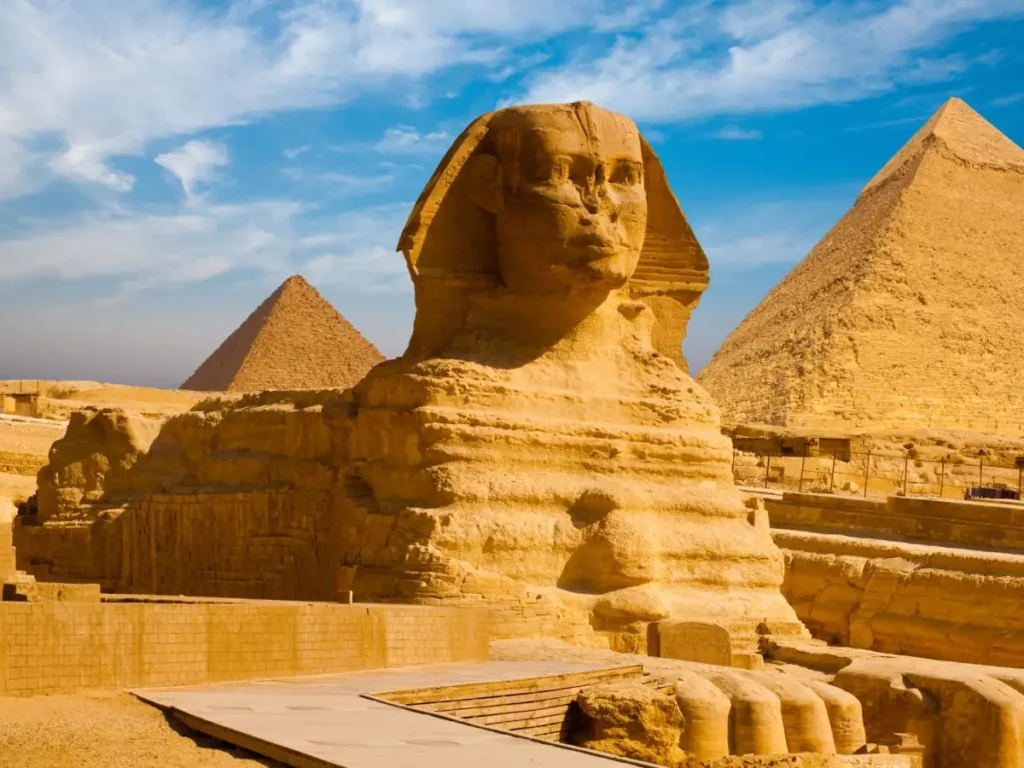
The Great Sphinx is one of the world’s largest sculptures. It measures 73 meters (240 feet) long and 20 meters (66 feet) high. This limestone masterpiece has a human head on a lion’s body and has fascinated visitors for thousands of years as it guards Egypt’s Giza plateau.
The construction date of the Great Sphinx remains debatable. Most archeologists believe ancient Egyptians carved it around 2500 BCE during the
Old Kingdom, under the reign of either Khufu or Khafre. This ancient wonder is approximately 4,500 years old and continues to puzzle researchers today. The remarkable construction required about 100 workers using stone hammers and copper chisels,
who completed this massive statue in roughly three years. Of course, many questions about the Great Sphinx’s purpose and interior remain unanswered. Workers carved it directly from the
Giza plateau’s bedrock, and this
UNESCO World Heritage Site stands as the most prominent example of sphinx art worldwide. Many secrets still wait to be found within its ancient walls.
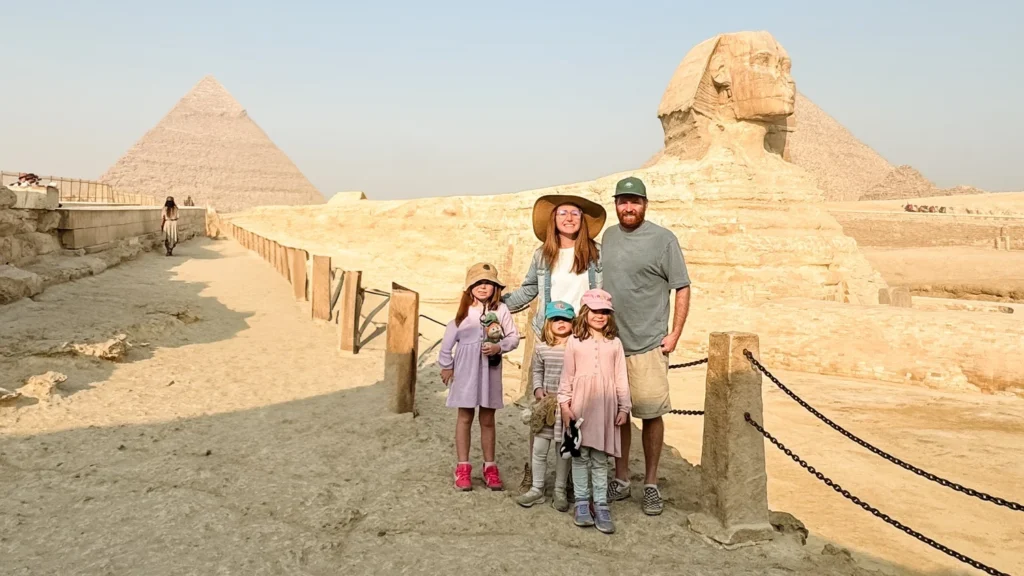
The Great Sphinx stands majestically on the Giza Plateau, carved from soft limestone with a lion’s body and a pharaoh’s head. Most Egyptologists believe the face belongs to Pharaoh Khafre, though this connection relies on circumstantial evidence. The monument features a 20-foot-wide face and rises 66 feet from its base to the head’s top.
The Sphinx’s damaged face remains one of its most fascinating aspects. Many people wrongly blame Napoleon Bonaparte for shooting off its nose. The real culprit was a Sufi named Muhammad Saim al-Dahr who damaged it in the ninth century AD. He believed people were wrongfully treating the statue as a deity.
Also
Researchers have found that there were three tunnels inside the Great Sphinx, but these passages seem to end abruptly. Recent studies have also revealed hidden cavities beneath the monument. These include a deep hole near the tail that connects to a large chamber, and another smaller chamber lies underneath the paws.
The Sphinx’s religious importance changed significantly over time. The New Kingdom period saw it become linked to the sun god Hor-em-akhet (Harmachis), known as “Horus-at-the-Horizon”. Around 1400 BCE, Pharaoh Amenhotep II constructed a temple nearby and dedicated it to this cult, nearly a millennium after the Sphinx’s creation.
Most scholars date the Sphinx to approximately 2500 BCE. However, some alternative theories suggest it might be much older – maybe even 9,000 years old. These theories stem from precipitation-induced weathering patterns found on the monument’s upper sections.