The Most Fascinate Historical Cities in Egypt

Giza Pyramids
away from the danger of flooding at the time of the Nile’s inundation. However, it could not be too far away from the bank because the river would be used to transport blocks of fine-quality limestone for the outer casing from Tura, on the other side of the Nile. The site chosen would be at a point on the desert plateau that would prove a firm rock base capable of supporting the great weight of the pyramid without any risk of cracking. Some of the oldest structures in Cairo date back to almost two centuries BC during the Greco-Roman period; however,
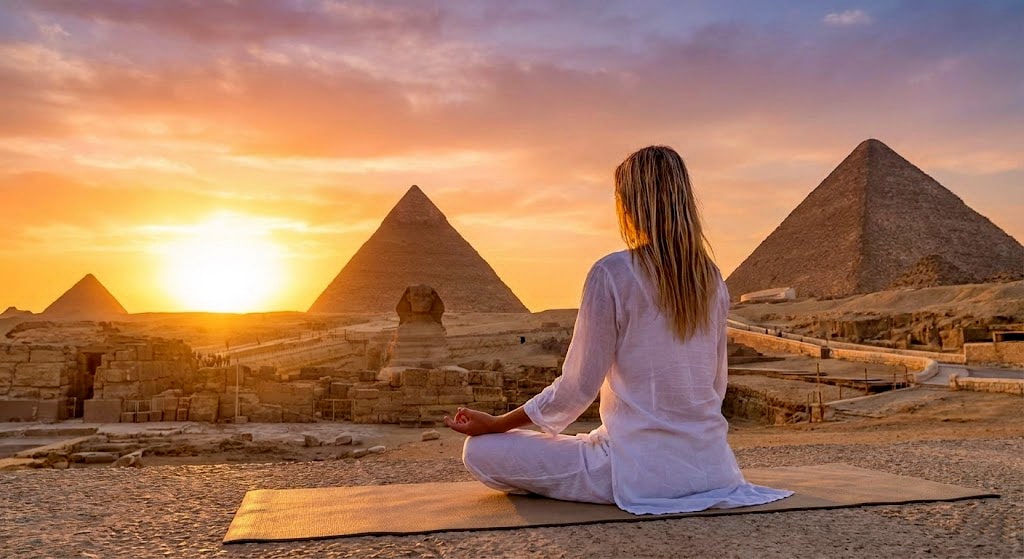
the Giza Pyramids are considered the most famous and oldest structures among all other pyramids in Egypt. Despite being close to Cairo City, the gap in time between building the pyramids and the city itself proves that they have distinct histories. Before Cairo ever existed, the pyramids at Giza were part of an older city’s legacy and civilization. The ancient city of Memphis was the source of the authority of the Old Kingdom (2686–2181 BC) of Ancient Egypt, and it was the hometown of the Egyptians who built the pyramids. One of the interesting Egypt pyramids facts is that, during that period,
Grand Egyptian Museum
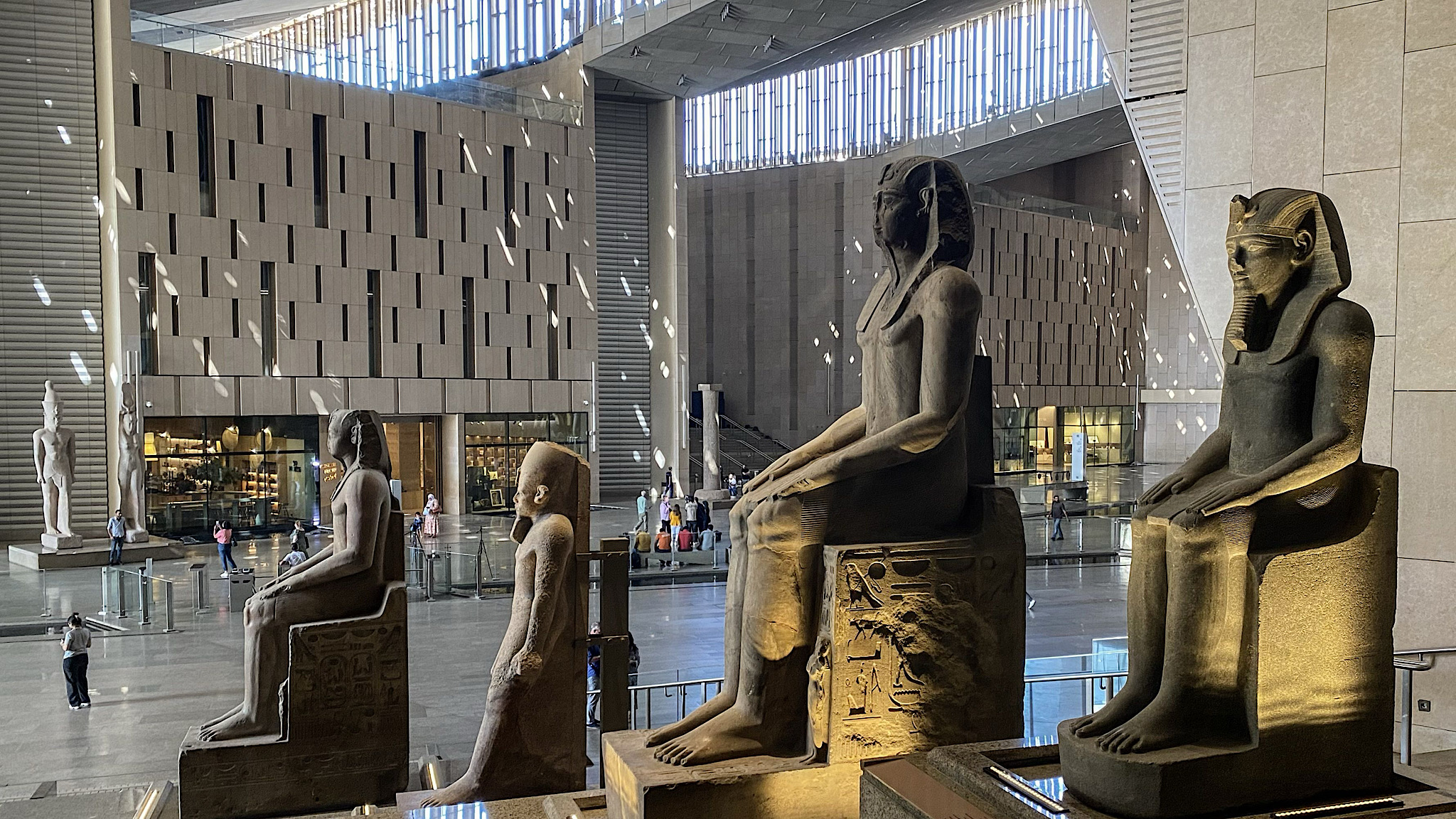
Grand Egyptian Museum is a national archaeological museum in Giza, Egypt. Dedicated to Ancient Egypt and its culture, society, and artifacts, the GEM is the largest museum in the world for a single civilization. Located about 2 kilometers (1.2 mi) from the Giza Pyramid Complex,
the museum houses a collection of Egyptian artifacts from various periods of Egyptian civilization, from the Predynastic Period to Roman Egypt. There are an estimated total of over 100,000 artifacts, including at least 20,000 that were displayed for the first time ever,
such as the complete King Tutankhamun collection comprising 5,398 pieces, on display in a 7,500 m2 (81,000 ft2) section of the museum.[Some newly-restored pieces will be displayed for the first time, such as the second solar ship of Khufu, the collection of Queen Hetepheres (mother of King Khufu),[9] and the collection of Yuya and Thuya (parents of Queen Tiye). You are drawn to the charm of historic cities that have endured because you are a history and culture enthusiast.
These historical treasures, which are dispersed throughout the world, invite you to take a trip through time and provide an enthralling look into the past. These places, which include the imposing pyramids of Egypt and the breathtaking ruins of ancient civilizations, are living museums that take you back in time and pique your interest.
As you discover the most intriguing historical cities in the globe, each with a distinct tale to tell, get ready to be enthralled. Immerse yourself in the rich fabric of human history, where stories of victory, hardship, and cultural development are whispered in every stone. This article will take you through a carefully chosen selection of places that will astound you, regardless of whether you’re a history geek or just someone who values the beauty and significance of ancient wonders.
Independent Travel vs. Nile Cruise
1. Luxor, Egypt: The Ancient Thebes
The magnificence of Egypt’s pharaonic past is demonstrated by Luxor, the ancient metropolis of Thebes. Discover the maze-like tombs in the Valley of the Kings and the Valley of the Queens,
where the secrets of pharaohs and nobles have been preserved for millennia. Admire the enormous statues of Ramses II in the Karnak Temple Complex a breathtaking example of ancient architecture.
You will be taken back to the era of the strong New Kingdom, when Egypt ruled supremely, as you explore the historic remains. Imagine the elaborate ceremonies carried out by high priests, the magnificent processions of pharaohs and their entourages, and the fine craftsmanship that covered every square inch of these hallowed locations. Luxor is a real treasure that will pique your interest in the mysterious realm of ancient Egypt.
The origin of Colossi of Memnon’s name

Its modern Arabic name is Kom el-Hatan but the Colossi of Memnon is better known for its Roman name, the Temple of Memnon. A hero of the Trojan War, Memnon was a king of Ethiopia who traveled with his army from Africa to Asia Minor to help defend the belea guered city under attack but it was slain by Achilles.
The Mortuary Temple of Hatshepsut (1479–1458 BCE)

Hatshepsut Temple Luxor is blessed with a number of heavenly pieces of art that showcase the extraordinary elements on which this great civilization was built and all the reasons why Hatshepsut the greatest pharaoh in the history of ancient Egypt. The temple of Hatshepsut is the finest example of the brilliant architecture that once existed during the days of ancient Egypt. The Story Beyond the Mesmerizing Hatshepsut Temple
Luxor Temple
luxor Temple On the east bank of the Nile River, in the south of Egypt, the World’s Largest Outdoor Museum, Luxor City, contains one of the most beautiful temple standing. The Luxor Temple is a mark of ancient Egyptian civilization, a strikingly graceful monument in the heart of modern Luxor. Different than other temples in Luxor, the Luxor temple was not built in adoration to a god or to a god figure of the kings and pharaohs; instead, it was built in dedication to the rejuvenation of kingship.
Many kings might have had their crowning at the Temple of Luxor, whether crowned in reality or conceptually, as in the case of Alexander the Great, who claimed he was crowned at Luxor It appears that he had never traveled south of Memphis, which is considered the modern city of Cairo. In the Egyptian language, the Luxor Temple is known as ipet resyt, which means the southern sanctuary; its main function was during the annual Opet festivals. At these festivals, the statues of Amun, Mut, and Khonsu were moved from Karnak, along the Avenue of Sphinxes, and reunited here during the inundation Aswan the magical city in Egypt
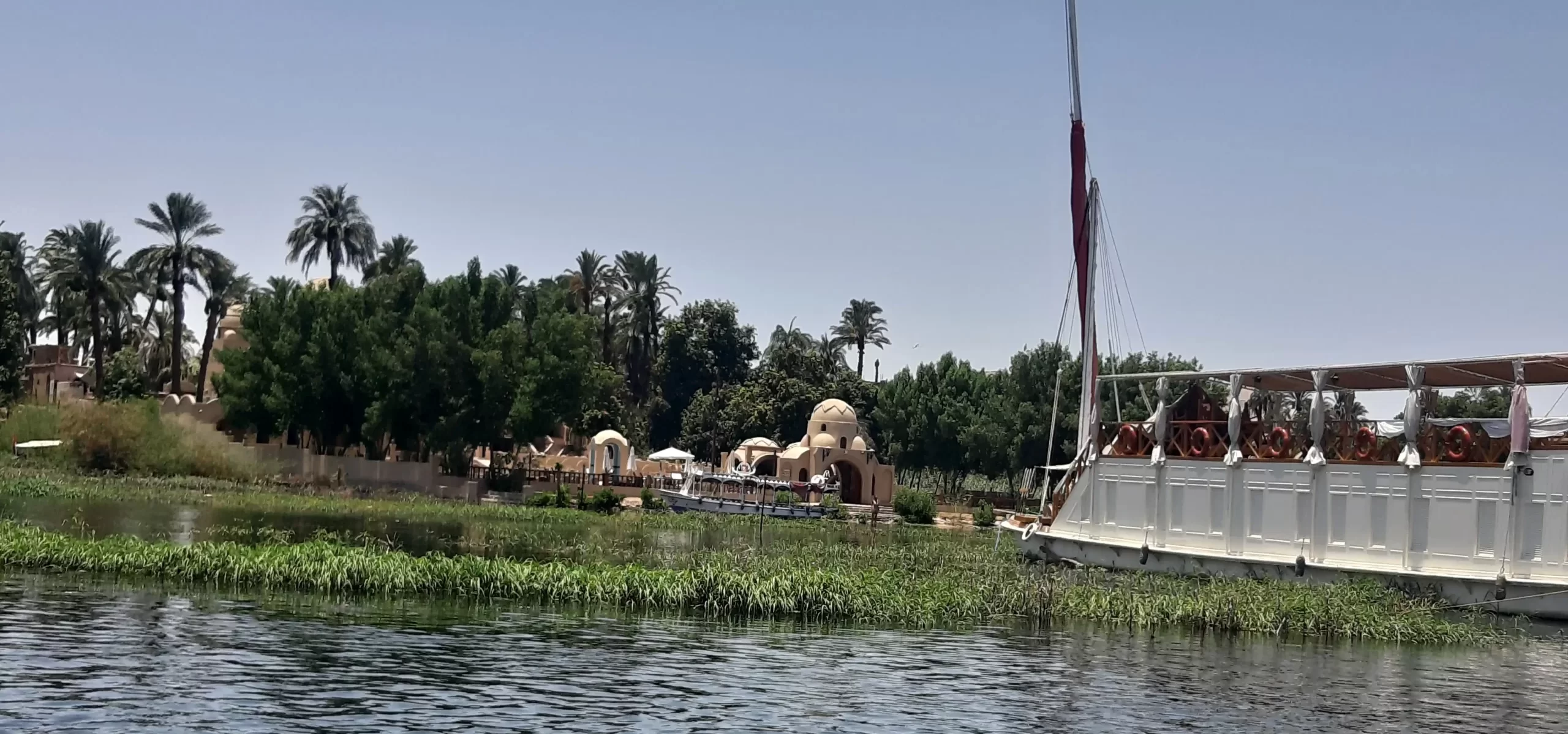
The ancient city of Scene and known to the modern world as Aswan, the city is located to the north of Aswan Dam and Lake Nasser, about 425 miles south of Cairo. It was ancient Egypt’s gateway to Africa and is part of the UNESCO Creative Cities Network. The River Nile is said to be in its most glorious form in Aswan –
flowing through the majestic desert and granite rocks, with a backdrop of green tropical plants. Aswan’s local quarries supplied granite for many ancient Egyptian monuments and are still functional. Being famous for trade and markets, the souks in Aswan are full of colorful spices, enchanting fragrances, handmade baskets, and vibrant scarves.

The local people of Aswan are a mix of Nubians and Upper Egyptians. At some point in time, the Nubian kingdom used to rule all of Egypt and parts of Sudan – it was called the Kingdom of Kush. One of the most famous leaders of Kush was Piye, who conquered Egypt and became the pharaoh. Today, Aswan has many Nubian villages, as the area is an extension of ancient Nubia, which was flooded by the water of Lake Nasser when the high dam was completed in 1970. Nubians are very friendly and you can visit one of their villages to witness their hospitality and view their colorfully decorated houses.
What does Abu Simbel look like?

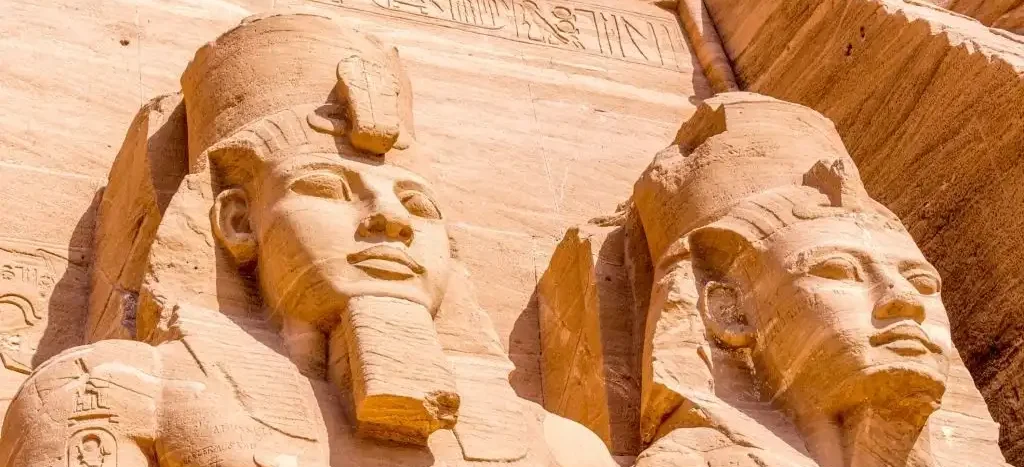
There are two temples. The first one is the Great Temple, which is dedicated to Ramesses II himself, and the second temple, the Small, is dedicated to his wife, Queen Nefertari. Great Temple The Great Temple at Abu Simbel took around twenty years to build. Also known as the Temple of Ramses II, dedicated to the gods Amun Ra-Horaakhty,
and Ptah, as well as to the Great King Ramesses himself. generally considered the grandest and most beautiful of the temples commissioned during Ramesses II’s reign and one of the most beautiful in Egypt. The entrance to the Great Temple is flanked by four colossal statues on its façade, 20-meter statues, each one representing Ramesses II seated on a throne. The façade of the main temple is decorated with hieroglyphs that commemorate the great victory of Ramses II at the Battle of Kadesh.
Upon entering the great temple. there are a series of rooms, dedicated to Ramses himself and important members of his family. The final room, the sanctum sanctorum, remains in darkness every day except two days a year This is not done by chance; it requires a broad knowledge of science, mathematics, architecture, and astronomy to achieve this result.