Beneath the Sands: The 2026 Breakthroughs at Saqqara That Are Rewriting History
Silence is the loudest sound in Saqqara. It is a weight that presses against your chest the moment you step off the modern asphalt and onto the shifting, golden dunes that guard the Step Pyramid of Djoser. For most, this place is a dusty relic of a bygone era. For those of us who have spent years studying the hieroglyphs etched into these tomb walls, Saqqara is not a graveyard. It is a living, breathing library that has decided, after millennia of slumber, to finally share its secrets.
Something strange happened in early 2026. The ground—so familiar, so mapped, so thoroughly picked over by generations of explorers—began to yield treasures that defied our current understanding of the Old and New Kingdoms.
Why are we suddenly seeing so much?
It isn’t just luck. It is the marriage of raw intuition and advanced geophysics. While the world watched news cycles, our archaeological teams were busy running Ground Penetrating Radar (GPR) across the unexplored sectors of the northern plateau. The data came back as a series of jagged, impossible lines. We thought it was noise. We were wrong. It was the architecture of an entirely forgotten administrative district, buried beneath meters of desert accumulation.
Fifteen decades of dust, gone in a heartbeat.
Walking through these newly opened shafts feels like trespassing on time itself. We found over 150 burial shafts, most of them pristine. Think about that for a second. We are talking about objects that haven’t seen the light of day since the time of the pharaohs. These aren’t broken pots or loose beads; these are complete funerary assemblages.
In one chamber, we discovered a cache of papyri that reads like a ledger from a high-stakes government office. We’ve always viewed the ancient Egyptians through the lens of temples and gods. But these scrolls? They are about grain logistics, taxation, and the intricate bureaucracy required to build a nation. They make the pharaohs look less like distant deities and more like visionary CEOs. It’s a humanizing revelation that changes how we talk about Egyptian civilization.
The colors that refuse to fade.
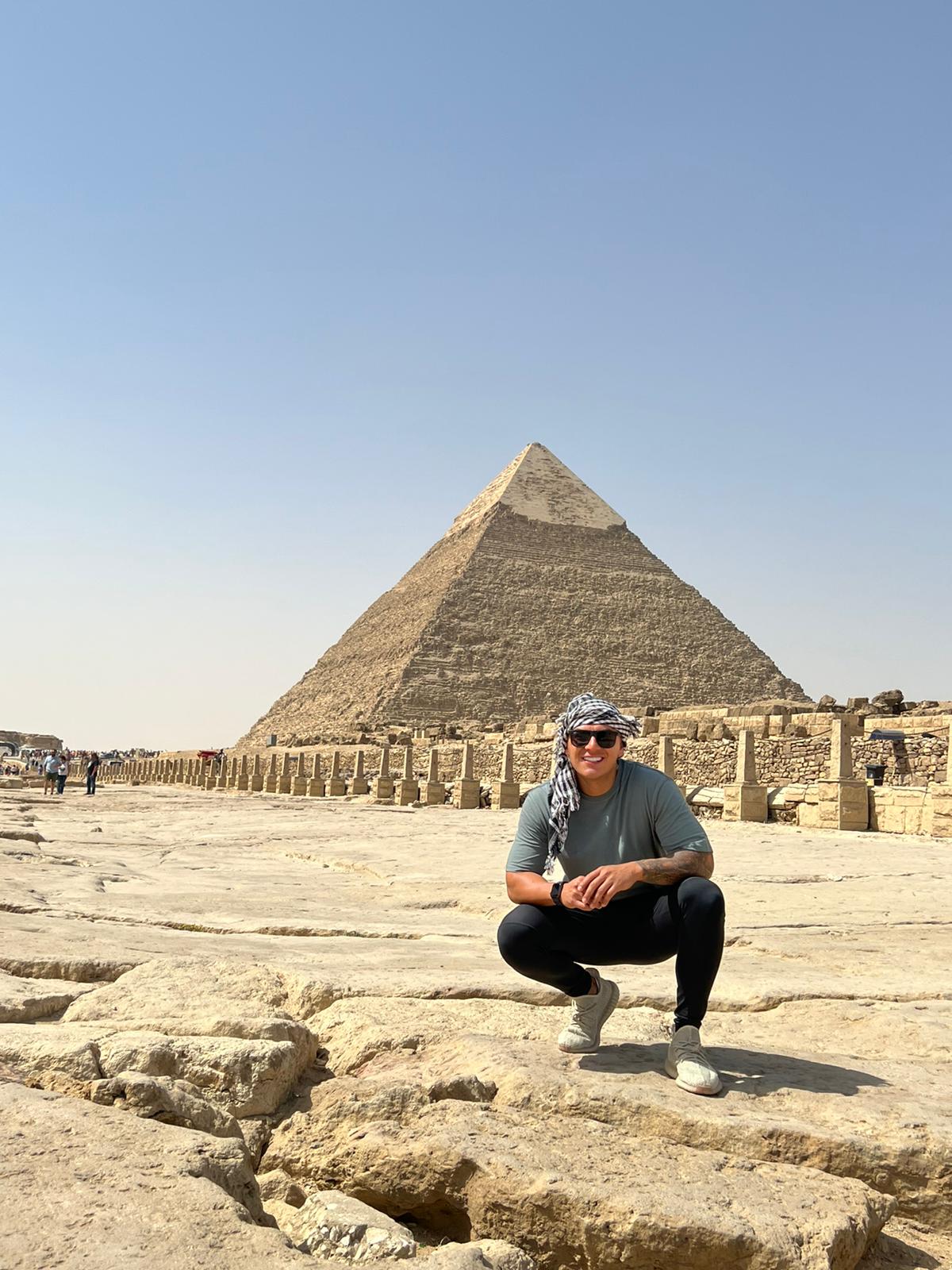
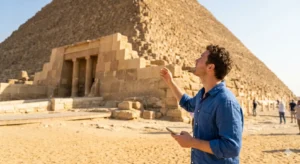
Djoser or Step Pyramid the first pyramid built in Egypt, Saqqara, Egypt, Africa
Stepping into a newly opened tomb here is a sensory assault. You expect drab, beige stone. Instead, you are met with blues so vibrant they seem electric, and ochres that burn with life. In the southern sector of Saqqara, we uncovered a series of murals that depict daily life—the harvest, the hunt, the laughter of children—with a clarity that stops you in your tracks.
The artisans who painted these walls were not just decorating a tomb; they were creating an eternal insurance policy against being forgotten. In 2026, we have finally become the audience they were waiting for.
The global narrative is shifting.
The international community has been quick to react. From the headlines in The Associated Press to the deep-dive features in historical journals, the consensus is clear: the history books are outdated. When CBS News reported on the protective measures being taken for these sites, they weren’t just talking about preserving stone. They were talking about preserving the continuity of human ingenuity.
Some researchers are even suggesting that the timeline of the dynastic transitions needs to be recalibrated by hundreds of years. If our previous dates were wrong, what else have we missed? The 2026 season has effectively turned the field of Egyptology into a giant, high-stakes debate.
A journey into the unknown.
At King Tut Tours, we don’t just observe this history; we live it. We’ve seen the exhaustion on the faces of our excavators and the pure, unfiltered joy when they wipe dust from an artifact and reveal a name that hasn’t been spoken in three thousand years. It is a privilege that we want to share with those who crave more than just a selfie at an archaeological site.
We aren’t offering a tour. We are offering a key.
When you stand in these shafts, you realize that the distance between us and the people who carved these stones is not as vast as we imagine. They were innovators. They were planners. They were dreamers who looked at the horizon and decided to build something that would last forever.
The work in 2026 is far from over. New shafts are being cleared as I type this. Every morning brings the possibility of a new discovery that could shift the paradigm once again. Egypt is not just a destination; it is an ongoing, evolving dialogue with our past.
Are you ready to join the conversation? The sands are moving, and history is waiting for you to witness it firsthand.
[Click here to customize your 2026 Egypt Expedition with King Tut Tours]