Dahabiya vs Nile Cruise :Which Delivers the Better Experience
Your Egyptian experience will be greatly influenced by your choice between a Dahabiya and Nile cruise. They visit similar locations and travel the same route between Luxor and Aswan, but they are very different in terms of atmosphere, group size, flexibility, and expense. While larger cruises offer more amenities and a social setting, dahabiyas offer a more intimate, boutique experience with fewer guests. Knowing these distinctions enables you to select the choice that best suits your expectations, travel preferences, and financial constraints.

What is a Dahabiya?
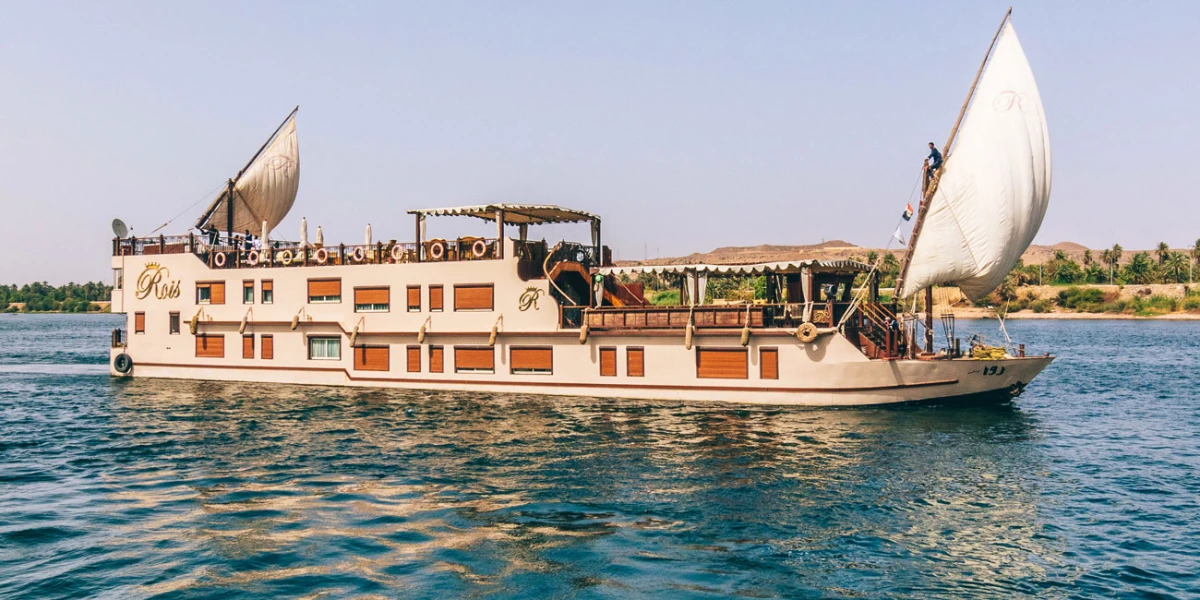
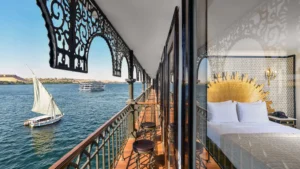
A dahabiya is traditional Egyptian sailing boat that has been used for generations to carry people and goods along the Nile. Modern dahabiyas provide boutique floating hotels that can accommodate only 8–12 guests in cozy, premium settings by fusing traditional style with modern luxury.
Key characteristics:
Small capacity: Maximum 8-12 passengers across 4-6 cabins Traditional propulsion: Primary power from wind sails, with backup motor for when wind fails Intimate atmosphere: Boutique hotel feel with personalized service Flexible itineraries: Can dock at smaller sites inaccessible to large ships Slower pace: Leisurely 4-7 night journeys emphasizing relaxation Higher cost: Typically 2-3 times more expensive than standard
Nile River cruise options : Experience of a Floating Resort
A typical Nile cruise takes place on specially constructed motor ships with a capacity of 100–200+ passengers. These ships are intended to function as floating resorts with extensive facilities, planned itineraries, and effective temple visits along the Luxor–Aswan route.
Large capacity: 100-200+ passengers across multiple decks Motor-powered: Diesel engines providing reliable, scheduled sailing Resort amenities: Swimming pools, restaurants, bars, entertainment, shops Fixed itineraries: Standardized 3-4 night routes visiting major temples Efficient schedules: Tight timing maximizing temple visits Better value: Lower per-person costs due to economies of scale Social atmosphere: Opportunities meeting fellow travelers
The Nile cruise delivers comprehensive, value-oriented experiences where convenience, amenities, and efficient sightseeing take priority over intimacy and flexibility.
The Essential Distinction Between Nile Cruise and Dahabiya Cruise

Dahabiya: 8-12 Guests
A Dahabiya Nile cruise’s tiny guest capacity is its defining feature. Everyone knows each other by name in a matter of hours, even if there are only 8–12 people in total. The dining area, lounge, and sun deck are common areas that never feel crowded. You can find isolation with ease, but you can also find companionship when you want it.
Instead than creating anonymity on a cruise ship, this intimacy generates the feel of a house party. Meals turn into social events when people instinctively converse. Small groups are bonded by shared experiences, such as nightly storytelling, touring temples together, and watching sunsets from the balcony, in ways that are not feasible with 200 strangers.
The small size also allows dahabiyas to anchor at remote locations, away from the cruise ship crowds that descend on major temples simultaneously. You’ll experience temples peacefully, without navigating through tour group congestion.
Nile Cruise: 100-200+ Passengers
Nile cruise luxury packages
Traditional Nile River cruise ships accommodate far more guests across multiple decks. This scale brings both advantages and disadvantages:
Advantages:
- More amenities (pools, multiple restaurants, entertainment)
- Greater social opportunities meeting diverse travelers
- More activity options (fitness centers, shops, organized entertainment)
- Better economies of scale keeping costs lower
Disadvantages:
- Less personalized service
- Crowded common areas during peak times
- Large groups arriving at temples simultaneously
- Less flexibility in schedules and stops
Nile cruise capacity is ideal for tourists that value affordability over exclusivity, prefer the social dynamic of larger groups, or desire resort-style amenities. The modest size of a dahabiya offers unparalleled benefits for individuals looking for intimate interactions.
Itinerary and Flexibility: Where Dahabiyas Shine
Dahabiya Nile Cruise Flexibility
One of the dahabiya Nile cruise’s greatest advantages is itinerary flexibility. Small size and traditional design allow dahabiyas to:
Anchor anywhere: No need for designated cruise ship docks—dahabiyas can tie up along riverbanks at scenic spots, small villages, or remote temples large ships cannot access.
Visit smaller sites: While both dahabiyas and Nile cruise ships visit major temples (Karnak, Luxor, Edfu, Kom Ombo, Philae), dahabiyas can stop at lesser-known sites like:
- Gebel el-Silsila: Ancient sandstone quarries with rock-cut shrines
- El-Kab: Pharaonic town ruins and rock tombs
- Local villages: Brief stops experiencing Egyptian rural life
- Scenic anchorages: Overnight stops at beautiful river locations away from towns
Flexible timing: Without rigid schedules coordinating hundreds of passengers, dahabiya Nile cruise captains can adjust timing—staying longer at temples if guests are particularly interested, or departing earlier if everyone’s satisfied.
Sailing experience: When wind permits, dahabiyas actually sail under wind power, creating peaceful, romantic experiences impossible on motor-powered Nile cruise ships.

Traditional Nile River cruise itineraries follow standardized routes refined over decades for maximum efficiency:
- 3-Night Cruises: Luxor → Edfu → Kom Ombo → Aswan (or reverse)
- 4-Night Cruises: Add more time in Luxor or Aswan
- 7-Night Cruises: Round-trip Luxor-Aswan-Luxor
These itineraries visit all major temples but operate on fixed schedules. Large ships must dock at designated ports, limiting anchorage locations. Temple visits occur during specific time windows, meaning you visit alongside other cruise ships—sometimes dozens simultaneously.
The efficiency works brilliantly for travelers wanting comprehensive temple coverage in minimal time. The structure ensures you see everything important without worrying about logistics or schedules.
Dahabiya Nile Cruise: Intimate Boutique Experience
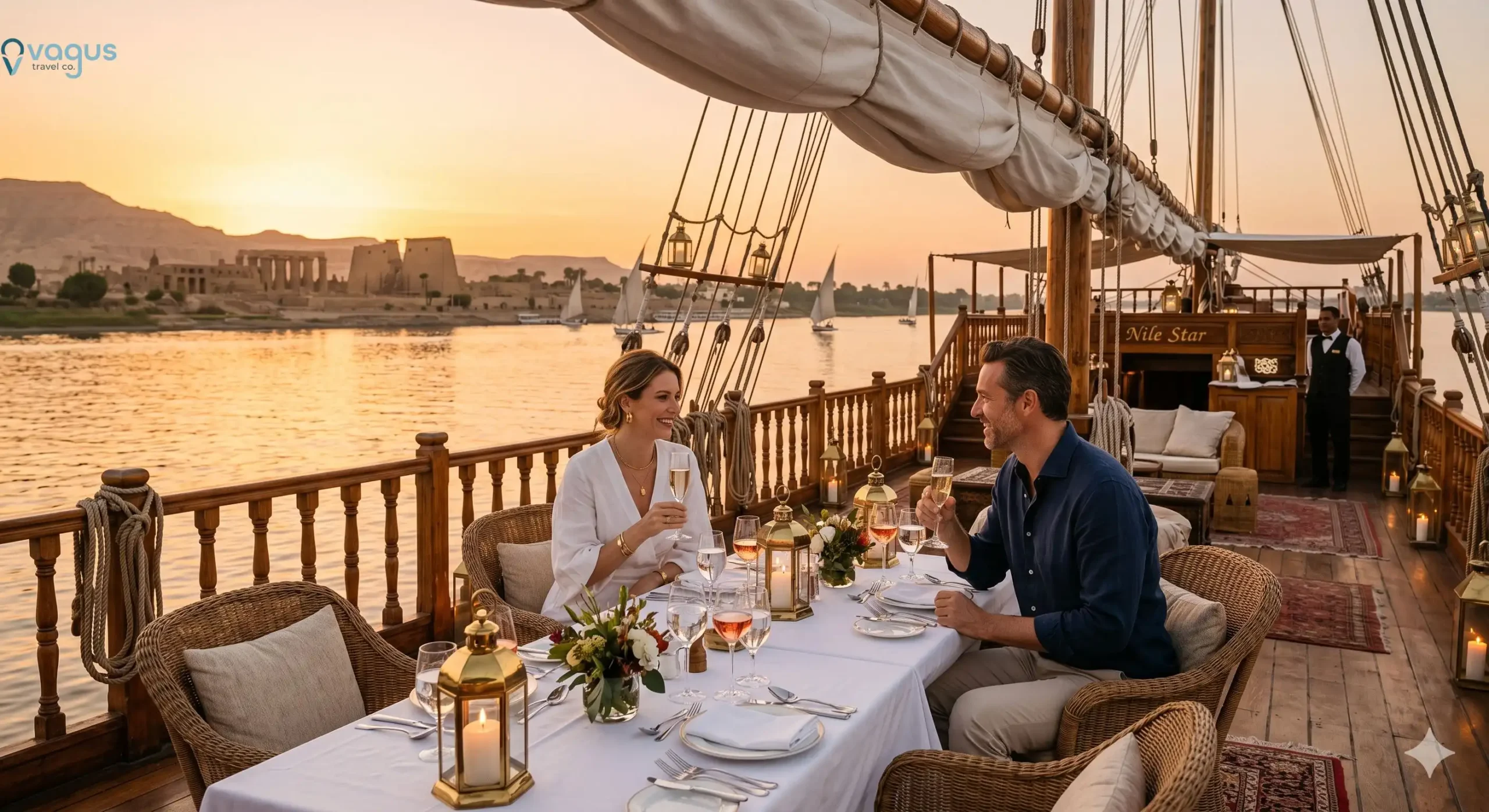
The ambiance of the Dahabiya Nile cruise is more akin to upscale boutique hotels than cruise ships. It is similar to sailing on a private yacht with friends when there are just 8–12 people present: Personalized service: Crew members (usually 6–8 individuals serving 8–12 guests) are fully aware of your interests, dietary requirements, and preferences. Calm atmosphere: There are no competitors for deck chairs, no crowds at breakfast buffets, and no announcements over PA systems. There is peace and quiet.
Flexible dining: Rather of rigid seating arrangements, meals are tailored to each person’s schedule. Meals are prepared by many Dahabiya Nile cruise lines according to the tastes of the passengers.
Romantic setting: Dahabiyas are perfect for couples, honeymooners, or anybody looking for romantic encounters because of their small size, traditional sailing, and tranquil ambiance.
Cultural immersion: At village stops, smaller groups allow for more in-depth interaction with Egyptologist guides, crew members, and locals.
Nile Cruise: Resort-Style Experience
Conventional Nile cruise ships function as floating resorts with a wide range of amenities: Social atmosphere: High passenger numbers foster lively social situations where people can meet a variety of passengers, form friendships, and share their experiences with a large number of people. Options for entertainment include galabia parties,
belly dance performances, Nubian music, evening concerts, and organized events. All-inclusive amenities: Resort-level facilities include swimming pools, sun terraces with loungers, many bars, stores, and occasionally fitness centers or spas. Predictable quality: Reputable cruise lines provide dependable quality, standardized service, and professional operations. Family-friendly: With greater room for kids, a variety of dining options, and kid-friendly activities, larger ships are more suited for families.
Dahabiya Pricing
Expect dahabiya costs ranging from $300-600 per person per night depending on boat quality, season, and included services. A typical 4-night Luxor-Aswan journey costs $1,200-2,400 per person.
Dahabiya Pricing
Expect dahabiya costs ranging from $300-600 per person per night depending on boat quality, season, and included services. A typical 4-night Luxor-Aswan journey costs $1,200-2,400 per person.
Why the premium?
- Small guest numbers mean costs split among fewer people
- Higher crew-to-guest ratios
- More personalized service and attention
- Boutique boat maintenance and operations
- Flexible, customized experiences
What’s typically included:
- All meals and soft drinks
- Egyptologist guide
- Temple entrance fees (sometimes)
- Small boat transfers
- Afternoon tea/coffee
What costs extra:
- Alcohol (usually)
- Tips for crew and guide
- Optional excursions (hot air balloons, Abu Simbel)
Nile Cruise Pricing
For mid-range quality, a typical Nile cruise costs between $100 and $200 per person per night, while luxury choices cost between $200 and $400. The average cost of a four-night trip is either $800–1,600 (luxury) or $400–800 per person (mid-range).
Why better value?
- Economies of scale with 100-200+ passengers
- Standardized operations
- Efficient resource use
- Volume purchasing power
What’s typically included:
- All meals (buffet or set menus)
- Most onboard entertainment
- Egyptologist guide
- Use of all facilities
What costs extra:
- Alcohol and soft drinks (usually)
- Temple entrance fees (usually separate)
- Optional excursions
- Tips for crew and guide
Bottom line: Dahabiya Nile cruise experiences cost 2-3 times more than comparable Nile cruise options. Whether the premium justifies the intimate experience depends on your priorities and budget.
Temple Visits: Same Sites, Different Experiences
Major Sites Both Visit
Both dahabiya Nile cruise and Nile cruise itineraries visit Egypt’s essential Nile temples:
Luxor East Bank:
- Karnak Temple Complex
- Luxor Temple
Luxor West Bank:
- Valley of the Kings
- Hatshepsut Temple
- Colossi of Memnon
Between Luxor and Aswan:
- Edfu Temple (Horus Temple)
- Kom Ombo Temple (dual Sobek-Horus temple)
Aswan Area:
- Philae Temple (Isis Temple)
- Aswan High Dam
- Abu simbel temple
Both also offer optional Abu Simbel excursions (typically separate cost)
The Visit Experience Differs
Dahabiya advantages:
- Flexible timing avoiding cruise ship crowds
- Can visit during quieter morning/afternoon hours
- Access to smaller sites (Gebel el-Silsila, El-Kab)
- More time at temples if desired
- Smaller group enables better guide interaction
Nile Cruise advantages:
- Efficient scheduling covers everything systematically
- Larger groups sometimes get priority temple access
- Well-established timing refined over years
- No concerns about missing important sites
Accommodation and Dining: Boutique vs Buffet
Dahabiya Cabins
Dahabiya cabins typically feature:
- Elegant traditional design with modern comforts
- En-suite bathrooms (usually showers, occasionally tubs)
- Air conditioning
- Panoramic windows
- Handcrafted furnishings
- 4-6 cabins total per boat
The intimate scale means attention to detail—higher quality linens, toiletries, and finishing touches.
Dining: Served meals (not buffets) prepared fresh by onboard chefs, often customizable to preferences. Meals served in indoor dining rooms or on open-air decks.
Nile Cruise Cabins
Traditional Nile cruise ships offer:
- Standardized cabins across multiple decks
- En-suite bathrooms
- Air conditioning
- Windows or balconies (varies by cabin category)
- Consistent quality matching ship rating (3-5 star)
- 50-100+ cabins per ship
Dining: Usually buffet-style for breakfast and lunch, with set menus or buffets for dinner. Multiple restaurants on luxury ships. Consistent quality but less personalization.
Who Should Choose Which?
Choose Dahabiya If You:
✅ Value intimacy and exclusivity over resort amenities
✅ Want peaceful, romantic experiences
✅ Prefer boutique hotels to large resorts
✅ Are traveling as a couple or small private group
✅ Don’t mind paying premium for personalized service
✅ Enjoy flexibility over structured schedules
✅ Want to avoid large tour groups
✅ Appreciate traditional sailing experiences
✅ Seek authentic cultural immersion
✅ Have 5-7 days for more leisurely sailing
Choose Nile Cruise If You:
✅ Want comprehensive resort amenities (pools, entertainment)
✅ Prefer social atmosphere meeting many travelers
✅ Are traveling with family (especially children)
✅ Value efficiency and comprehensive itineraries
✅ Have budget constraints (better value per dollar)
✅ Enjoy structured activities and entertainment
✅ Prefer 3-4 night shorter journeys
✅ Want predictable, established experiences
✅ Like having multiple dining and bar options
✅ Are first-time Egypt visitors wanting comprehensive coverage
When to Book Dahabiya
Book 3-6 months ahead, especially for October-April peak season. Limited boats and small capacity mean dahabiyas sell out quickly. Private boat charters require even earlier booking.
When to Book Nile Cruise
Book 2-3 months ahead for peak season (October-April). Summer months (May-September) often have last-minute availability and discounts, though extreme heat makes sightseeing challenging.